Commercial Moves in West Kensington
If you are planning commercial moves in West Kensington, you are likely dealing with more than just boxes and furniture. A business relocation can involve deadlines, building access, staff coordination, IT equipment, stock, filing systems, specialist items, and the challenge of keeping disruption to a minimum. Whether you are moving a small office, a retail unit, a practice, a studio, or a larger workplace, the right moving service can make the process far more manageable.
West Kensington is a busy part of West London with a mix of converted buildings, modern offices, residential streets, local shops, hospitality venues, and professional premises. That variety matters. It means each move has its own access points, loading considerations, and timing pressures. A local team familiar with the area can help you plan the move around real-world conditions, not just a checklist on paper.
On this page, you will find practical information about how business relocation services work in West Kensington, what is usually included, how to prepare, what affects pricing, and why local experience can make a difference. If you are comparing providers, arranging a site move, or simply want a reliable plan for the day, this page is designed to help you take the next step with confidence.
Why businesses in West Kensington need a tailored moving service

Not every move is the same, and commercial relocations are rarely as simple as transporting a few desks. Many businesses in West Kensington operate from mixed-use buildings, upper-floor premises, shared entrances, or streets where loading space is limited. Some need early-morning starts to reduce disruption. Others need careful handling of furniture, files, kitchen equipment, or delicate stock. A tailored service is important because it reflects the way local businesses actually work.
In areas around West Kensington, Hammersmith, Barons Court, Earl's Court, and Kensington Olympia, businesses often face tight access windows and practical constraints that require planning. If your premises are in a building with lift access, controlled entry, narrow staircases, or restricted parking, the move must be organised around those details. A commercial removal team that understands these challenges can help reduce stress and save time.
Commercial Moves in West Kensington are often most successful when the mover takes a methodical approach: surveying the premises, identifying fragile or high-value items, mapping out access, and agreeing a schedule that fits your business operations. That approach is especially valuable for local companies that cannot afford a long interruption to customer service or staff productivity.
Who we help

Commercial relocation support in West Kensington is useful for a wide range of organisations. Some clients are moving one office floor into another nearby building. Others are consolidating several workspaces or expanding into a larger unit. The service is also suitable for businesses that need help moving inventory, fixtures, archive materials, or specialist contents with care.
Typical customers include:
- Small and medium-sized offices
- Professional services firms
- Medical, therapeutic, or consulting practices
- Retail shops and showrooms
- Cafés, restaurants, and hospitality venues
- Creative studios and production spaces
- Educational, training, and community organisations
- Warehousing and back-office operations
Businesses in and around West Kensington often need a move that feels organised, discreet, and efficient. If your team is still working during the relocation, or if you have customer appointments to protect, a local commercial removals team can adapt the plan around your operating hours. That flexibility matters when you are trying to keep the business moving while the premises are changing.
What is usually included in a commercial move

Every business move is different, but a well-managed service typically covers a clear range of tasks. The aim is to handle the practical lifting, transport, and coordination so your staff can focus on the business itself. In many cases, the service begins before moving day with a discussion of what is being moved, what needs special care, and what access arrangements are in place.
Depending on the job, the service may include:
- Pre-move planning and move-day scheduling
- Survey of access, parking, and loading conditions
- Packing support for documents, equipment, and office contents
- Furniture dismantling and reassembly where needed
- Safe moving of desks, chairs, cabinets, and shelving
- Handling of IT equipment and business electronics with care
- Transport between sites in West Kensington or further afield
- Placement of items in the new location as agreed
- Optional help with crates, labels, and move coordination
For many customers, the value is not only in the physical move itself. It is also in the organisation around the move. A good service should help reduce confusion, minimise damage risk, and keep the relocation process predictable.
How the process works
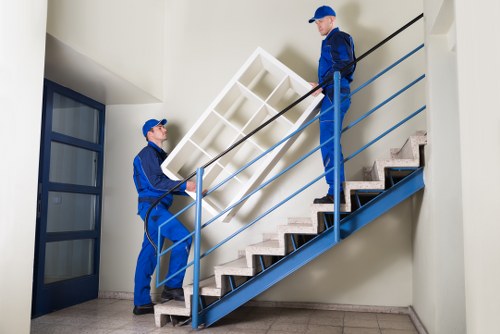
When arranging commercial moves in West Kensington, most business owners want a straightforward process. You need to know what happens first, who is responsible for what, and how the move will be carried out on the day. A professional relocation service usually follows a sensible sequence so there are no unnecessary surprises.
Step 1: Initial discussion
You explain what needs moving, the size of the premises, the moving date, and any special requirements. This is the stage where access, timing, and building rules can be flagged. If you are in a high-footfall area or a shared commercial property, it is important to mention those details early.
Step 2: Planning and preparation
The move is then organised around your schedule. This may involve deciding which items are moved first, whether packing support is needed, and how fragile or heavy items will be handled. If your business runs close to a station, busy road, or restricted parking area, the plan should reflect that.
Step 3: Move day execution
On the day, the team loads items carefully, moves them securely, and places them in the new premises according to the agreed layout. This is where good coordination matters. A structured approach can help avoid bottlenecks and reduce the risk of damage.
Step 4: Final placement and practical wrap-up
Items are positioned where they are needed, and any agreed dismantling or reassembly is completed. The better this stage is managed, the quicker your staff can resume work in the new location.
For business owners, this process is valuable because it gives you a clearer picture of the whole move. It also makes it easier to brief staff, manage downtime, and keep the relocation aligned with your operational needs.
Preparing your business for the move

Preparation is one of the biggest factors in a smooth relocation. Even a highly capable moving team can only do so much if the premises are not ready. The best results usually come when the business owner or office manager completes a few practical tasks in advance and shares the key information with the mover.
Here is a useful preparation checklist:
- Separate items that must be moved, stored, recycled, or disposed of
- Label boxes and equipment by department, room, or destination area
- Back up important digital files before moving day
- Notify staff of the schedule and their responsibilities
- Check building rules for lifts, loading bays, and access times
- Reserve parking or loading space if required and permitted
- Disconnect or prepare appliances, computers, and specialist equipment safely
- Keep important documents, keys, and essential items in a secure, separate folder or container
It also helps to appoint one point of contact for the move. This person can answer questions, confirm decisions, and ensure the team on-site gets timely information. For larger moves, a simple floor plan of the new premises can make placement much quicker.
Practical tip: if you are relocating from a building with stair access or limited lift use, tell the mover exactly what is on each floor. That includes any heavy filing cabinets, archive boxes, or fragile equipment. The more detail provided in advance, the smoother the day is likely to be.
Why local knowledge matters in West Kensington
Choosing a local team for commercial moves in West Kensington can make a real difference. This area includes a mix of residential streets and commercial spaces, and the moving logistics can change from one road to the next. Some buildings offer straightforward access; others require tighter planning because of narrow entrances, limited waiting space, or shared access with other occupants.
West Kensington also sits close to other busy parts of London, so traffic conditions and timing can affect how efficiently a move is carried out. A mover that already understands the local road layout, nearby loading restrictions, and common access issues is better placed to plan the day realistically. That can mean fewer delays and fewer awkward conversations with building managers or neighbours.
Local relevance also matters because businesses often need flexible scheduling. You may want an early start, a weekend move, or a phased relocation that reduces disruption to staff and customers. A nearby commercial removal team is usually better positioned to respond quickly, conduct a site visit if needed, and adjust the move plan to suit the property and the timetable.
Commercial property types we often see
West Kensington includes a broad range of premises, and that variety affects how each move needs to be handled. A small office in a converted building does not require the same approach as a retail shopfront or a service-based practice. Understanding the property type helps the mover choose the right equipment, manpower, and sequence for the job.
Common commercial property types include:
- Traditional office suites in converted buildings
- Modern serviced office spaces
- Ground-floor retail units
- Upper-floor studios and creative workspaces
- Health and wellness practices
- Hospitality venues with back-of-house equipment
- Shared workspaces and multi-tenant premises
Each of these properties can present different challenges. For example, a retail move may require careful handling of display units and stock, while a studio might involve awkward equipment and delicate materials. A practice could need extra attention to filing, privacy, and appointment schedules. By matching the service to the property, the move becomes safer and more efficient.
Commercial relocation is rarely about transport alone. It is about moving a business in a way that preserves order, protects assets, and helps you reopen or resume work as quickly as possible.
Access, parking, and loading considerations
One of the biggest practical issues in West Kensington is access. Business premises may be located on residential streets, near busier junctions, or within buildings that limit vehicle stopping time. Parking can be tight, and loading areas may not always be directly outside the entrance. This is why a local move plan should consider the street environment as carefully as the contents of the property.
Important questions to ask include whether there is sufficient space for a van or larger vehicle, whether any permits or permissions are needed, and whether items must be carried a longer distance from the vehicle to the entrance. If the building has narrow hallways, communal areas, or lift restrictions, these should be identified before the move.
For businesses near West Kensington station, Hammersmith Road, Kensington Olympia, or surrounding routes, timing can also matter. Morning and evening traffic may affect the pace of the move. A practical commercial moving team will usually try to schedule in a way that avoids the busiest periods where possible.
If your premises are difficult to access, mention this early when requesting a quote. It helps the moving team plan labour, vehicle choice, and timing more accurately. That is especially important when moving bulky furniture, crates, or sensitive equipment.
Pricing factors for commercial moves
Business customers often want to know what affects the cost of a commercial move. While exact pricing depends on the details of the job, there are several common factors that influence the quote. Understanding these factors can help you compare providers more confidently and avoid misunderstandings later on.
Typical pricing factors include:
- The size of the premises and volume of items
- The distance between the old and new location
- Access challenges such as stairs, lifts, or parking restrictions
- Whether packing, dismantling, or reassembly is required
- The need for specialist handling of fragile or heavy items
- The time and date of the move, including weekend or out-of-hours work
- How much staff support is needed on the day
- Any additional stops, storage, or phased relocation requirements
It is usually a good sign when a provider asks detailed questions before quoting. That suggests they are taking the move seriously and trying to account for the actual conditions rather than giving a vague estimate. For a business, that kind of clarity is helpful when planning budgets and internal schedules.
Requesting a quote with clear information about your premises, timing, and contents can help you get a more accurate response. If there are items that require special care, make sure those are mentioned from the beginning.
What to expect on move day
On moving day, the most important thing is to keep the process controlled and organised. The crew should arrive with a clear plan and a good understanding of the premises. You should know who is leading the move, which items are being loaded first, and where each part of the business is going in the new location.
On the day itself, a good commercial moving team will usually:
- Confirm access and loading arrangements
- Review the move plan with the main contact
- Protect or handle items carefully during removal
- Load the vehicle in a logical order to support efficient unloading
- Deliver and place items according to the agreed layout
- Complete any required reassembly or practical adjustments
As the business owner or manager, it helps to keep essentials separate. That may include keys, paperwork, chargers, computer peripherals, and any items needed to reopen immediately. If staff will be returning to work the same day, prioritising desks, chairs, and core equipment can make the transition smoother.
Good communication is often the difference between a stressful move and a manageable one. If there are last-minute changes, share them promptly so the team can adapt.
How to reduce downtime for your business
Most businesses want the move to happen with as little interruption as possible. Downtime can affect customers, appointments, productivity, and revenue, so minimising it is usually a top priority. The best way to reduce downtime is to plan the relocation around the way your business actually operates.
Some useful ways to reduce disruption include:
- Scheduling the move outside your busiest trading hours
- Packing non-essential items in advance
- Moving departments in phases if the business is large
- Keeping essential equipment accessible until the last moment
- Sharing a detailed floor plan of the new premises
- Preparing staff to unpack or reset their workspaces quickly
For many businesses in West Kensington, the goal is not just to relocate items. It is to reopen efficiently. That may mean planning a Friday evening move and being ready to operate again the following morning, or moving in stages so one part of the business stays active while another is being transferred.
When the moving plan is aligned with your operations, the process feels much more controlled. That is one of the biggest advantages of using a service focused on business relocation rather than a generic transport option.
Handling sensitive, fragile, and specialist items
Many commercial premises contain more than ordinary office furniture. Some have sensitive files, display units, specialist machines, artwork, technical equipment, or items that require careful handling. These contents need more than simple lifting; they need the right packing materials, careful loading, and a sensible order of movement.
If your business includes fragile or specialist items, make sure the mover understands:
- Which items are delicate or high-value
- Whether they can be dismantled safely
- Whether any items must stay upright
- Whether electronic equipment should be disconnected in a particular way
- Whether certain boxes or containers must be clearly labelled
In some cases, these items may benefit from being moved separately from the main furniture load. That can make handling safer and reduce the risk of unnecessary pressure on delicate contents. If you are moving archives, confidential paperwork, or customer records, a measured and organised approach is especially important.
Careful handling is not just about avoiding breakage. It also helps protect continuity, privacy, and the day-to-day operation of the business.
Why businesses choose a local company
There are several reasons local customers prefer a nearby company for commercial moves in West Kensington. A local team is often easier to coordinate with, quicker to schedule, and more familiar with the area’s practical constraints. That can be valuable when the move involves multiple floors, a busy street, or a narrow delivery window.
Another advantage is responsiveness. If your plans change, or if you need a follow-up move after the main relocation, a local business is often better placed to assist without long delays. This is especially useful for companies that are growing, reconfiguring their workspace, or moving in stages.
A nearby mover may also have greater familiarity with common property layouts in the area, from converted terraces and mansion blocks used as offices to modern commercial units and shared work environments. That familiarity helps create a more realistic plan and a smoother day overall.
Contact us today if you are comparing options for a business move in the area and want a practical, customer-focused approach. The right local service can make the process feel much more manageable from the first enquiry through to the final placement of items.
Areas covered around West Kensington
Commercial relocation work in West Kensington often extends into nearby neighbourhoods and business districts. This is helpful if your company is moving between nearby areas, opening a second site, or relocating to a premises a short distance away. Local coverage can also make scheduling easier when your old and new addresses are both within West London.
Areas commonly covered include:
- West Kensington
- Barons Court
- Earl's Court
- Hammersmith
- Fulham
- Kensington Olympia
- North End Road and surrounding commercial streets
- Nearby parts of Kensington and Shepherd's Bush
If your business is moving beyond the immediate area, a local provider may still be able to support the relocation depending on the scope of the job. The key is to share the full details early so the route, timing, and vehicle requirements can be planned properly.
Common questions from local business customers
When people enquire about a commercial move, they usually have practical questions rather than general ones. They want to know how disruptive the move will be, what they need to prepare, and how much help can be provided on the day. Below are some of the most common questions asked by businesses in West Kensington and nearby areas.
Can the move be done outside working hours?
In many cases, yes. Out-of-hours or weekend scheduling can be useful for businesses that need to stay open during the week. It depends on the size of the move, access arrangements, and the specific needs of the premises.
Do I need to pack everything myself?
Not necessarily. Some customers prefer to pack certain items in advance, while others want support with packing, wrapping, or crate organisation. The level of help depends on the service agreed beforehand.
Can you move office furniture and IT equipment?
Yes, commercial moves often include desks, chairs, filing cabinets, monitors, computers, printers, and similar equipment. Sensitive electronics should be prepared carefully, and it is wise to back up data before anything is moved.
What if my building has difficult access?
That is common in West Kensington, especially in older or shared buildings. Tight entrances, stairs, lifts, and parking limitations can be planned for if they are mentioned early.
How far in advance should I book?
It is usually best to arrange the move as early as possible, particularly if you need a specific date or out-of-hours scheduling. More notice gives everyone time to plan access, packing, and staffing.
What makes a move feel successful
A successful business relocation is one that protects your assets, respects your schedule, and helps your team get back to work quickly. It does not need to be dramatic or complicated. In fact, the best moves often feel calm because the planning was done well beforehand and everyone knew what to expect.
For businesses in West Kensington, success usually means:
- Clear communication from the start
- A realistic moving schedule
- Careful handling of furniture and equipment
- Minimal disruption to daily operations
- A practical setup in the new premises
- Confidence that the move was handled professionally
If you are preparing for a move and want it handled with care, now is the right time to start planning. Whether you are moving a compact office, a busy retail unit, or a specialist workplace, a local commercial removals team can help make the process easier to manage.
Request a free quote when you are ready to discuss your move in more detail. The sooner your plan is in place, the easier it is to organise the day around your business needs.
Final thoughts for West Kensington businesses
Relocating a business is a major task, but it becomes much easier when the move is planned properly and the team understands the local area. From access challenges and loading restrictions to sensitive equipment and tight schedules, the details matter. That is why so many local customers prefer a service that is built around real commercial needs rather than a one-size-fits-all approach.
If you are looking into Commercial Moves in West Kensington, think about what your business needs to keep operating smoothly. Do you need careful packing? Help with office furniture? A weekend move? A phased relocation? Once you know the priorities, choosing the right service becomes much simpler.
Book your service now if you are ready to move forward, or contact a local team today to discuss your plans, your schedule, and the practical details that will shape the move. With the right preparation and local knowledge, your relocation can be handled in a way that supports your business from start to finish.